Disability Grant 2026: R2,400 a month, and how the assessment decides
On this page (7 sections)
The Disability Grant pays R2,400 a month to people aged 18 to 59 whose physical or mental condition makes them unable to work for six months or longer. A state-appointed doctor assesses you — the test is what you can still do, not what your diagnosis is called. Most awards are temporary (6–12 months) and lapse on their end date without a reminder. From 60 the grant is replaced by the Older Persons Grant at the same rate.
Who qualifies
| Requirement | Detail |
|---|---|
| Age | 18 to 59. From 60 the Older Persons Grant takes over at the same amount |
| Medical | A physical or mental disability making you unfit to work for longer than six months, confirmed by a state-appointed doctor |
| Status | SA citizen, permanent resident or recognised refugee, living in South Africa |
| Income | Under R107,880 a year single; R215,760 married |
| Assets | Under R1,524,600 single; R3,049,200 married — excluding the home you live in |
| Other grants | You may not hold another grant in your own name; Grant-in-Aid can be added |
| Institutional care | Not payable if you are maintained in a state institution |
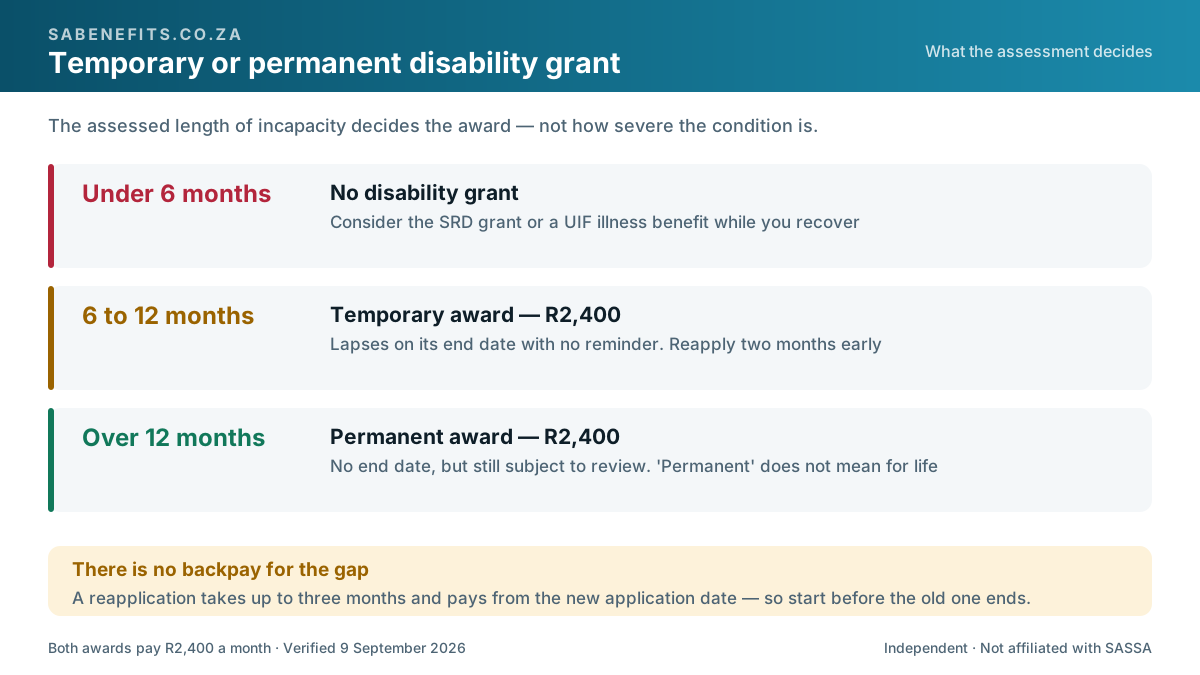
Temporary or permanent
| Assessed incapacity | Award | What happens next |
|---|---|---|
| Less than 6 months | No grant | Consider the SRD grant or a UIF illness benefit |
| 6 to 12 months | Temporary | Lapses on the end date — reapply with a fresh assessment |
| More than 12 months | Permanent | No end date, but still subject to review |
'Permanent' does not mean for life — it means the incapacity was assessed as lasting more than twelve months. Both types can be reviewed. The full comparison.
Documents
- Your 13-digit bar-coded ID or smart ID card.
- A medical assessment report no older than three months at the date of application.
- All previous medical records and reports — hospital summaries, specialist letters, scan reports, clinic cards.
- Proof of marital status, three months' bank statements and proof of income and assets.
- Your UIF 'blue book' or discharge certificate if you were formally employed.
Missing documents can be replaced with sworn affidavits — see documents you need. The medical assessment is the one thing that cannot be substituted.
Applying
- Collect your medical file first
Ask the clinic or hospital for copies of your records. This is the single highest-value thing you can do — it shapes the assessment and, if the grant is declined, it is what an appeal runs on.
- Apply in person at your SASSA office
The officer completes the form with you and books the medical assessment as part of the application.
- Attend the assessment
Free, arranged by SASSA, with a state-appointed doctor. Take your records and someone who sees you daily.
- Wait up to three months, then follow up
Disability applications often run to the full three months because the assessment must be scheduled. Keep your receipt and your cellphone number current.
While you wait, and if you are declined
- Claim the SRD grant while you are unemployed and waiting — R370 a month, applied for online, and it does not affect a pending disability application.
- Were you formally employed? A UIF illness benefit is usually worth far more than a grant, but claims expire — check that first.
- Children in your care? Claim the Child Support Grant for each of them.
- Declined? You have 90 days to appeal. Medical appeals succeed more often than any other kind, because an assessment is one short encounter and your medical file is years long.
Frequently asked questions
How much is the Disability Grant in 2026?
R2,400 a month from 1 April 2026, up from R2,320.
What conditions qualify for a disability grant?
There is no list. The test is functional: whether a physical or mental condition prevents you from supporting yourself through work for six months or longer, as assessed by a state-appointed doctor.
Can I apply for the Disability Grant online?
No. Apply in person at a SASSA office, where the medical assessment is arranged as part of the application.
Do I pay for the medical assessment?
No. SASSA arranges and pays for it. Anyone charging you for a 'SASSA medical' is running a scam.
What happens at 60?
The Disability Grant is replaced by the Older Persons Grant, at the same R2,400 — and with no medical assessment required from then on.
My temporary grant ended but I am still sick.
Reapply with a fresh medical assessment. Being still unwell does not restart it automatically — see grant lapsed.
Can I work at all while receiving it?
The grant is for people unable to support themselves through work. Earning income is tested against the means-test thresholds, and a change in circumstances must be reported — an unreported one is what a review is designed to catch.
Verified information
- Responsible body
- South African Social Security Agency (SASSA)
- Official source
- sassa.gov.za
- Status
- Officially confirmed
- Date verified
- Confidence
- High confidence
R2,400 confirmed as the amount in force since 1 April 2026. The six-month incapacity rule, the temporary/permanent split and the lapsing rule are confirmed against gov.za and SASSA guidance.
SA Benefits is independent and not affiliated with SASSA or government. Editorial guidance on this page is clearly separated from official information — see how we verify.
What's changed on this page (1)
Published with the confirmed R2,400 amount, the functional test the medical assessment applies, and the fact that most awards are temporary and lapse without warning.
Site-wide corrections are logged publicly in the corrections register.
Was this page helpful?
Your answer stays in your browser — we don't collect anything. It helps us decide what to fix and write next.